The Panama Canal/United States Current Discussions: The Myths and Truths
Last Updated on August 16, 2025 by Retire in Panama
This op-ed article, written (facts with our opinions) by Rod, Oscar, and Megan, best describes the situation regarding the United States’ statements about the Panama Canal. We in no way have any political agenda here. As always, we want to clarify things and ensure you know the truth about what is really happening and our feelings towards the situation. The sources of the article are listed at the end, if you want to do some more reading.
Over the last week, President Trump has made many false or misleading statements regarding the Panama Canal and threatened Panama with taking it back. This has led to much controversy worldwide, as over 150 countries rely on the Panama Canal. Here in Panama, the dislike from the Panama people is against the threats made, not against the U.S. citizens living in Panama.
Let’s review the false and misleading statements individually, then go into some more details.
 Myth One: The USA suffers too much owing to the elevated toll rates of the Panama Canal.
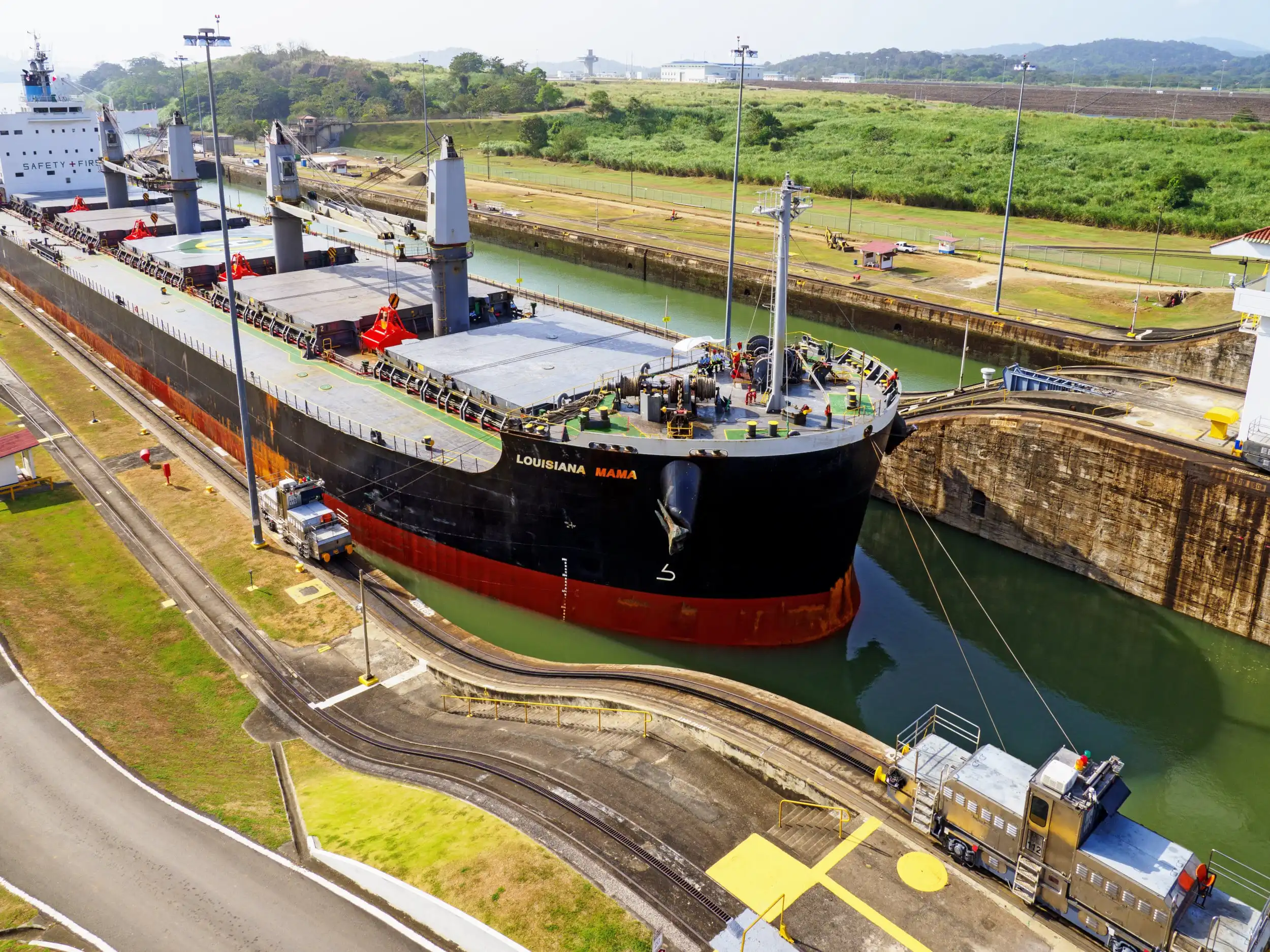
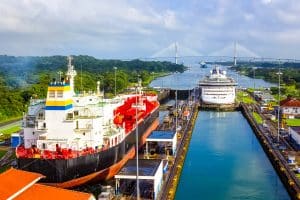
Truth: Tolls for using the Panama Canal amount to only 5% of the total cost of goods transported from Asia to the U.S. Though accounting for 2.7% of world trade, equal to $33 trillion in 2024, the Canal generates $6 billion in revenue per year for Panama. The Canal supports trade worldwide and represents an economic advantage for the USA, as opposed to freight going around South America or other routes, which would make it more expensive.
Every Ship pays the same rates, regardless of where it came from, its destination, or the flag it carries. The Panama Canal Advisory Board, led by retired U.S. Admiral William J. Flanagan Jr., approves any rate increases.
Myth Two: 38,000 American citizens perished during the construction of the Panama Canal.
Reality: As is wildly overstated, about 25,000 workers died in France’s attempts to build the Canal in the late 1800s- a tragic event due to this harsh, disease-ridden environment. Nevertheless, there were 5,600 fatalities out of 56,000 workers employed to build the U.S. phase (1904-1914). Around 300 of these deaths were U.S. Citizens. Most of the workers belonged to the Caribbean and African countries brought in by the U.S. for cheap labor in building the Canal.
Myth Three: The U.S. Navy pays too much and is discriminated against by Panama.
Truth: The U.S. Navy has advantages in passing through the Panama Canal that other countries and ships do not have. Naval vessels do not need to make reservations or bookings. They are accorded immediate passage priority over all other ship traffic. The Navy spent approximately $17 million on tolls from 2015 to 2024, totaling less than $2 million annually. That is hardly a significant financial burden for the U.S. military.
Myth Four: The Chinese government owns the Panama Canal.
Truth: Panama owns 100%, is under its control, and runs operations, rules, and maintenance, all governed by Panamanians. The Chinese military is not present in the Canal or anywhere in Panama.
Myth 5: A Chinese company owning two ports near the Panama Canal can close them on the order of Beijing.
Truth: Pacific and Atlantic ports, Balboa and Cristobal, are owned and run by CK Hutchison, a Hong Kong-based company. It has owned and run these ports for 28 years. It has 53 ports in 24 countries, including the U.S., but, as far as it is known, is not a banned entity according to the U.S. government. Panama has a vital role as supervising authority of all ships with Panama pilots on board moving in the Panama Canal coming into Balboa and Cristobal.
Who owns the Panama Canal?
The United States constructed it between 1904 and 1914, and it was one of the most outstanding examples of engineering achievement. This construction deeply depended on Afro-Caribbean labor, and the workers encountered many adversities while building the Canal.
Throughout the 20th century, the United States controlled and managed the Canal, operating and administering it in the Canal Zone. However, this changed in 1977 when both countries signed a treaty, the 1977 Torrijos-Carter Treaties, with Panama’s leader, Omar Torrijos, and the U.S. President at the time, Jimmy Carter. Over time, the Panamanians felt they could handle their own affairs by managing the Canal.
Since 1999, the Panama Canal has been operated by the Panama Canal Authority (ACP), an autonomous regulatory function of the Panamanian executive branch. The government and the legislature appoint the ACP directorate. Thus, channel operations are compatible with national strategic objectives. Under the Panamanian administration, the Canal has been modernized comprehensively, including the expansion project built between 2007 and 2016, doubling its cubic tonnage capabilities by six billion dollars. None of this money came from the United States or China. These additional locks focused on a new set of locks with increased dimensions for handling larger vessels called Neopanamax ship and reconfirming the Canal’s continuing importance for global trade.
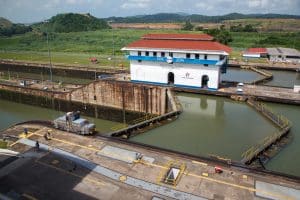 What about these Hong Kong (China) Ports?
CK Hutchison Port Holdings Limited, the Hong Kong-based company that promised full cooperation for audits on Wednesday, has already undergone a number of audits in recent years and has always complied with the exercise, both experts noted. It has operated the ports of Balboa and Cristobal since 1997, when the Canal was still under U.S. control, and secured a second 25-year lease in 2021 without causing a fuss. A giant of the industry, Hutchison Ports is not the type of company that Chinese authorities could easily maneuver. It’s one of the world’s leading port investors with massive portfolios. U.S., Taiwanese, and Singaporean companies also operate ports along the Canal, which are open to commerce from all countries.
Hutchison Ports has interests in 53 ports worldwide and more than 24 countries. The company notably operates the port of Stockholm in Sweden, as well as five Dutch ports and a dozen more in the Middle East. Given the scale of its assets, any collusion with China’s geopolitical interest would surely not go unnoticed. CK Hutchison Holdings, Hutchison Ports’ parent company, is one of the largest conglomerates registered in Hong Kong. In this Chinese territory, companies still enjoy a degree of freedom despite Beijing’s political and security clampdown on the former British colony.
Would the U.S. Use Force Against Panama?
Under the 1977 treaties, Panama committed to ensuring the Canal is open to all countries equally. Nothing mentions, let alone authorizes, the United States to recover or reclaim the Canal. Washington introduced amendments to the treaties that allowed unilateral U.S. military force to defend the Canal against the threat of closure. Only the fabrication of a false flag operation… could justify the use of military force in Panama under existing conditions, said Tapia. And that could only happen to keep the channel open, not to take it and exploit it economically, A military intervention is not going to occur, but President Trump could possibly pressure Panama to back off on any future China partnerships.
Secretary of State Visit
Later this week, the Secretary of State of the United States, Marco Rubio, will hold meetings with the President of the Republic, José Raúl Mulino, and with the administrator of the Panama Canal Authority (ACP), Ricaurte Vásquez, during his upcoming visit to the country, according to official sources. Media outlets such as Politico and Bloomberg reported on Wednesday, January 22, 2025, that Rubio’s visit to Panama is part of a tour of Latin America, which includes Guatemala, El Salvador, the Dominican Republic, and Costa Rica.
This meeting will not have Panama turn the Canal over to the U.S., any more than Denmark will sell Greenland to the U.S. or Canada will become the 51st state. All these threats against the countries are President Trump’s style of negotiation, and with the U.S. fears of Panama getting too close to China, that issue may be addressed. However, with an open dialogue, President Trump’s fears of Chinese control of the Canal could be put to rest. Perhaps the two countries could start a discussion on migrants and immigration, an actual problem both countries share.
In Conclusion
Therefore, the myths about the Panama Canal and the misrepresentations made regarding its operations and ownership by the United States have only been a fan to fuel tension between the two nations. This article has tried categorically addressing these wrong statements and pointing out the actual truth about the situation. The Canal is a fantastic thoroughfare for world commerce and is run and owned by Panama. Neither China nor any other foreign powers have control over it. The United States, strategically and economically, uses the Canal for its benefit. Panama treats it fairly with the same tariffs as other countries and special considerations for the U.S. Navy. The United States should approach this matter with appropriate information and not hyperbole.
 The relationship between Panama and the United States must be established through open discussions and mutual respect. The forthcoming visit by U.S. Secretary of State Marco Rubio provides a unique channel for discussing common aspects such as migration and trade while vanquishing the myths and fallacies concerning the Canal. Therefore, a partnership based on trust and accurate understanding must embrace these broader regional challenges and guarantee that the Canal continues to play a critical role in global commerce.
Retire in Panama Tours recently hosted our January group of North Americans who are exploring the possibility of relocating to Panama. Just two days ago, they had the opportunity to visit the iconic Panama Canal. This highlight is included in every tour, as we feel that learning the culture and history of Panama are just as important as the mechanics of making a move here. The Panama Canal is much more than a feat of engineering; it is a symbol of national pride and sovereignty for the Panamanian people. It represents their history, resilience, and global significance, which is critical in international trade. For those considering making Panama their new home, understanding the cultural and historical importance of the Canal is key to appreciating the country’s identity. It is a source of pride, much like Greenland is to Denmark or Canada to its citizens—an integral part of the nation’s story that will always belong to the Panamanian people.
https://www.dw.com/en/fact-check-can-trump-technically-take-back-panama-canal/a-71364492
https://www.foxnews.com/opinion/why-trumps-target-should-china-not-panama
https://newsroompanama.com/2025/01/25/what-panamanians-have-to-say-about-the-panama-canal/
https://www.britannica.com/topic/Panama-Canal/Capital-improvements