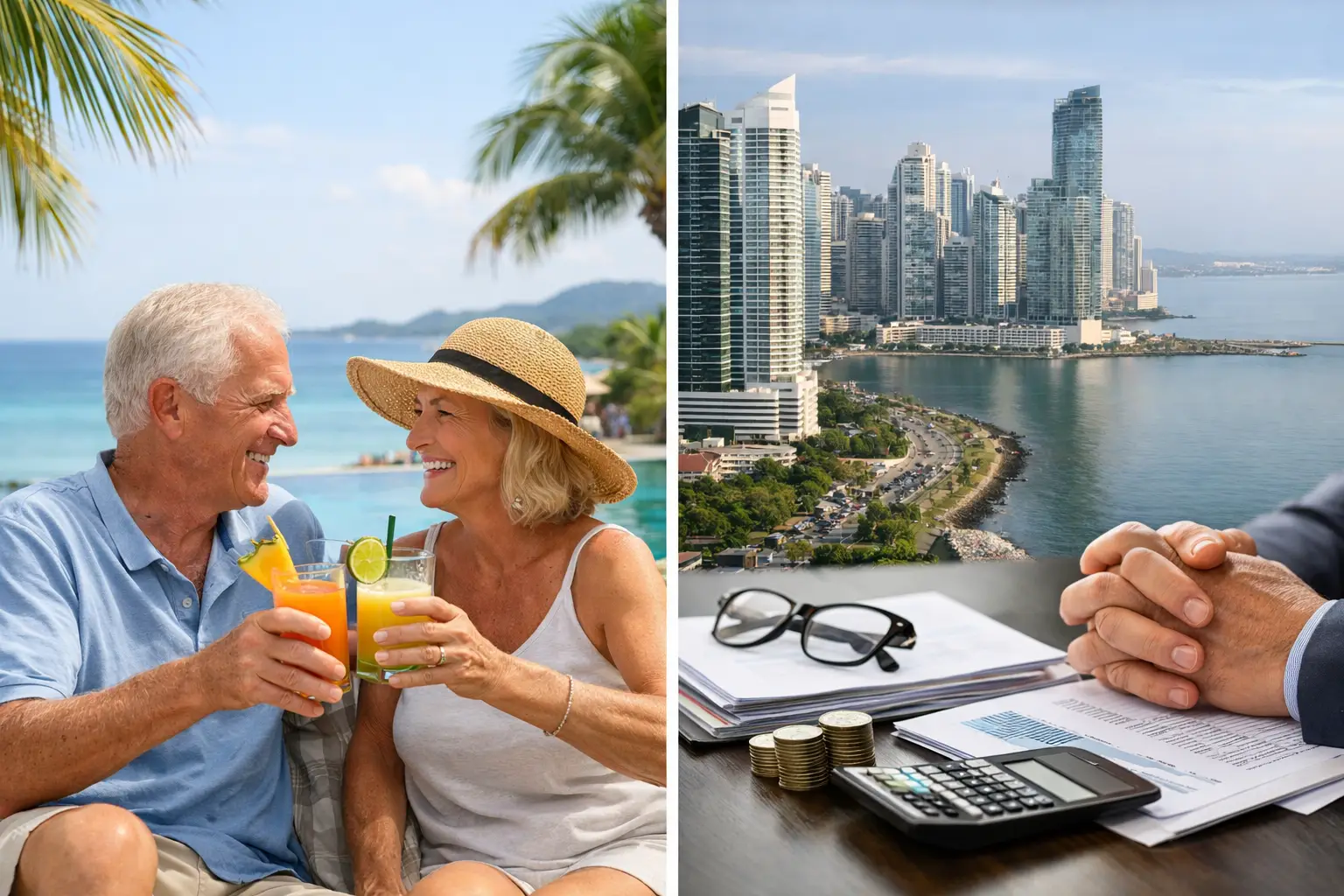
Retiring in Panama Pros and Cons
Last Updated on October 7, 2026 by Retire in Panama
Panama Pros & Cons, Expat Life, and Is Panama Safe?
Some people start with a budget. Others start with a dream. The reality of retiring in Panama’s pros and cons falls somewhere in between, when you stop thinking about if Panama is a good idea and start thinking about if Panama works for the way you want to live.
That makes all the difference. Panama can be an excellent choice for North Americans, but it’s not a one-size-fits-all solution. The right answer depends on your budget, your health needs, your tolerance for change, and the day-to-day lifestyle you want once the honeymoon phase is over.
Retiring in Panamas pros and cons start with lifestyle fit.
The biggest mistake we see is treating Panama as a single experience. It’s not. Panama City is very different from Boquete. Volcán is different from Coronado. Coastal living, mountain living, and city living each come with their own pace, costs, weather, and social scene.
That’s why broad claims like “Panama is cheap” or “Panama is easy” can be misleading. For some retirees, Panama offers tremendous value and a refreshing quality of life. For others, the trade-offs become obvious once they spend real time in the country beyond a vacation.
If you’re evaluating Panama seriously, it helps to look at both the advantages and the friction points through the lens of everyday living, not wishful thinking.
Retire In | Move to Panama
Small Group Tours & Panama Digital Relocation Guide
The pros of retiring in Panama
 Lower living costs can create real breathing room.
For many retirees, Panama’s biggest draw is financial. Depending on where and how you live, your monthly expenses may be meaningfully lower than in many parts of the United States or Canada. Rent, domestic help, dining out, and some services often cost less, especially outside the most expensive neighborhoods and luxury markets.
That said, lower cost does not automatically mean lower cost. If you choose to continue buying the imported goods you were used to back at home, rather than switching to local brands, you will spend more. You will need health insurance here, something people from Canada and most of Europe may not realize, so you will need to budget for that.
Residency options are a major advantage.
Panama is known for its ease of permanent residency, especially with its Pensionado Visa, which offers permanent residency to anyone with a lifetime pension of over $1000 a month, $1250 for married couples. The Friendly Nations Visa offers permanent residency for those investing $200,000 in a Panama bank account or buying real estate. The only catch is that you must keep the investment for 3 years.
This is one of the reasons Panama remains on the radar for relocation-minded North Americans. A country can be beautiful, affordable, and pleasant. Still, if legal residency is difficult or constantly changing, retirement planning gets harder fast. Panama has historically offered more structure and predictability than many alternatives.
Healthcare is often a pleasant surprise.
Good private healthcare is one of the most reassuring parts of living in Panama for many expats. In Panama City, especially, private hospitals and specialists can be impressive, and costs are often lower than what many Americans are used to paying.
Health care is readily available in expat zones. You’ll find doctors, labs, dental care, and pharmacies close by. The caveat is that care quality can vary by location and provider. In general, Panama City has the best options if you’re looking for the most specialists or more advanced care. For routine care, smaller towns are just fine, but if you have a serious condition, you may have to travel. That doesn’t mean you shouldn’t retire to the interior of the country. It just means you need to consider your age, your health history, and your risk tolerance when planning your retirement.
You have your choice of climates.
One underrated advantage of Panama is the variety here. You’re not stuck with just one climate. If you prefer cooler temperatures, you might enjoy the mountains. Check out Boquete and Volcán here. Or, if you prefer warm and tropical, you can live on the beach or in a lowland area. And if you prefer the convenience of the city, you can have tropical weather in the capital.
For retirees from colder climates, this can be a revelation. Tropical weather can mean an active retirement with more outdoor time and even fewer creaky joints. However, climate is highly personal, which is why I always recommend visiting different parts of the country before deciding where you’d like to settle.
The lifestyle can feel easier, less complicated, and more enjoyable.
Expats often remark about the laid-back lifestyle in Panama as one of their favorite things about the country. Less stress, less emphasis on consumerism, and more opportunity to build a daily routine that’s meaningful to you. Maybe you value fresh, healthy produce, maybe you prioritize lunch with friends every day, maybe you want to take a long walk every morning, or maybe you don’t want to spend all your time scraping to pay your bills.
Another practical advantage for retirees from the United States is that Panama is relatively close and easy to visit. Flights in and out of the US are relatively quick and affordable. If you have family ties that you want to maintain, this could be an important consideration.
Is Panama Safe?
Panama is generally considered safe for retirees, especially in well-established expat areas like Boquete, Coronado, and Pedasí, where communities are smaller and more relaxed, and where there is a visible police presence. In major indexes like Numbeo, World Nomads, and NationMaster, Panama has a lower crime index (safer) than both the US and Canada. Like anywhere, safety depends on your awareness and choices—petty theft can happen in busy parts of Panama City, but violent crime is not typically directed at retirees. Most expats find that by using common sense—avoiding poorly lit areas at night, securing their homes, and getting to know their neighbors—they feel just as safe, if not safer, than they did back home.
The cons of retiring in Panama
Bureaucracy can be infuriating.
Here’s one of the most common complaints. Paperwork for your residency visa, banking and financial issues, document certification and legalization, and navigating legal processes can seem slow and unpredictable if you’re used to a more streamlined process at home. You can get things done, but they may not happen on your schedule.
If you’re someone who values your independence and expects everything to work the way it does in the States, you might get frustrated more quickly. Panama isn’t impossible, but it is easier if you go into the process understanding that it takes time, patience, and local expertise. This isn’t just about filling out forms. It’s about managing your expectations.

You need to learn some Spanish.
While it’s true that there are areas of the country where you can easily get by without speaking much Spanish, especially in the early stages of your expat journey, over time, the language will play a role in nearly everything you do, from going to the doctor, to dealing with attorneys, to opening a bank account, to hiring someone to fix a leaky faucet, to chatting with your neighbors.
You certainly don’t need to master Spanish before you move here. Still, if you approach your expat adventure with a willingness to learn at least the basics of the language, you’ll have a better experience and feel more connected to the people and community where you’re living. Those who don’t like it may find themselves more isolated than they’d planned.
Infrastructure varies by location.
Some areas of Panama are modern. Some areas of Panama are less so. Sometimes these places are close together. Sometimes, internet service is great in one place but spotty in another. Sometimes roads, drainage systems, sidewalks, and public services are in good condition. Sometimes they are not. If you’re imagining some uniformly smooth and shiny retirement experience across the entire country, you’re going to be disappointed.
This is particularly important if you plan to work remotely, rely on regular deliveries, or prefer to be close to shopping or healthcare. The allure of a mountain town or a beach town may be real. But so are the trade-offs. The question isn’t whether a place looks good in a photograph. It’s whether it’s practical for your lifestyle.
The rainy season isn’t for everyone.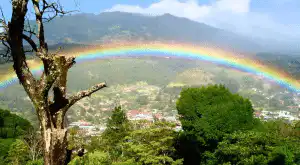
A lot of people talk about Panama’s sunshine. But few ask about the rainy season. In most places, the rainy season is lovely and lush. In October and November, there can be a lot of rain, sometimes daily in the afternoons, but two months is all you will have to deal with that.
This is another reason why quick trips can be deceiving. When you spend a few days in Panama during the peak dry season, you have no idea what the place is like to live in year-round. Climate isn’t just about warmth. Climate is about humidity, driving in the rain, and whether your environment uplifts or drains you.
What matters most when evaluating pros and cons?
Your choice of region can change everything. When someone asks whether Panama is a good place to retire, a better answer is, which region in Panama? If you’re a retiree who likes big-city living, private hospitals, or convenience, Panama City may be a great fit for you. If you like eternal spring weather or an active expat community, you may prefer Boquete. If you like something quieter and more agricultural, or something [closer to the ocean], you may prefer somewhere else entirely.
This is why boots-on-the-ground research is so important. You can’t judge an entire country based on a single hotel stay or a single Facebook group. You need to see different regions for yourself. You need to ask practical questions. You need to really understand what day-to-day life is like. Otherwise, you’ll never get an accurate answer to your questions. The pros and cons of retiring in Panama depend on your expectations.
The people who tend to enjoy living in Panama the most are those seeking something better. Not those who are looking for something identical to what they have now at a lower price point. If you’re willing to learn new systems, adapt to a different culture, and think carefully about where you live, Panama can be a great experience.
If what you’re really looking for is for everything to feel the same as the US, only cheaper, you may struggle with the transition more than you expect. That doesn’t mean anything is wrong with Panama. That means you need to be honest with yourself.
For many people, the best next step isn’t to keep second-guessing a decision on their laptop. The next best step is to see the country through the eyes of someone relocating there, which is why companies like Retire in Panama specialize in providing guided, on-the-ground exposure, rather than a standard tourist experience.
Retire In | Move to Panama
Small Group Tours & Panama Digital Relocation Guide
Oscar, Megan, & Rod
Retire in Panama Tours
Helping You Call Panama Home!


Thank you for the information.