What Is Required to Retire in Panama?
Last Updated on May 11, 2026 by Retire in Panama
People begin with a dream: sunshine and beaches, mountain living, and/or a new vibrant city. Then they realize there is a lot more to moving to Panama than just getting a Visa. They realize they have to consider income, healthcare, where to live, what to bring, their pets, buying a car, getting a driver’s license, and whether their day-to-day lifestyle will actually work in Panama.
This is why the most intelligent questions are not just, “Can I qualify? It can help you ask, “Can I thrive as an expat in Panama? The right answer to your question is, “It depends.” Panama makes retirement possible for many North Americans. Still, the right answer depends on your finances, your lifestyle, and how much support you want to make the move.
 Legally, What is Needed to Retire in Panama?
Many retirees often start with Panama’s Pensionado program. This is probably the most common retirement route. This is because the residency options vary with pension income and offer discounts that many retirees value.
Essentially, the basic standard requirement is a pension or retirement income of at least $1,000 per month for life. Most of the time, income should come from a government program like Social Security, a military pension, or a private company pension that pays for life. The threshold increases to $1,250 per month when you apply with your spouse.
Lifetime is the keyword here. Not all earnings are treated equally. Having a savings balance, an investment balance, or a short-term withdrawal from a retirement account does not qualify a person as a Pensionado. Only a guaranteed monthly pension for life gives a person pensionado status. One reason why so many people require a real eligibility review is that they read somewhere online.
You will also need legal documents to support your income. Usually, your passport, proof of pension income, a clean criminal background check, and, if your spouse is applying with you, civil documents such as your marriage certificate. For proper use in Panama, these official documents usually require authentication and proper preparation. They must be issued no more than 6 months before you apply in Panama.
Getting Residency is just One Part of the Process.
Many people think that once you have received residency approval, the hard part is over. In reality, just having Residency is not enough to retire successfully in Panama.
A feasible plan for housing, healthcare, banking, transportation, and communication is another need. When you move within a country as large as the US or Canada, you already know your daily life is based on systems that you are already used to. Moving to a foreign country means assimilating new cultures.
For instance, a common question from retirees is whether they should rent or buy first. In most cases, it’s smarter to rent first. This allows you to learn the market, test the neighborhood, and discover the practical differences between areas that may look similar online but feel very different in person. Boquete isn’t Coronado. Panama City is not in the Chiriquí area. A community in the same region can often feel alive and bustling, while another can feel dormant and spread out.
Money Needed Aside from Pension.
Even if you have the legal pension minimum, that doesn’t mean you are ready to retire in Panama. There’s another reality to your monthly budget.
Depending on the area of the US you’re coming from. No matter what kind of lifestyle you choose, Panama can certainly be more affordable than many parts of the US or Canada. A couple with a humble lifestyle in a smaller town may spend far less than a couple renting a luxury condo in Panama City, traveling often, and using private healthcare for everything.
It will be helpful to think through three different layers. First, there are upfront moving costs, such as legal fees, document preparation, moving some of your belongings, flights, temporary accommodation, and housing deposits. Afterward, the monthly living expenses will include rent, groceries, utilities, transport, and medical. Moreover, there are switching costs that people often overlook. Undertaking this would involve getting an internet connection, buying furniture, possibly buying a car, replacing items that wouldn’t make sense to ship, and taking exploratory trips.
Financial problems also matter a lot. In Panama, opening a bank account takes time and requires paperwork. Some retirees gradually develop local banking relationships while most of their financial life remains anchored in the US. When planning moves, a proactive approach can be just as smart as a reactive one. It is better not to turn up with the thought that all can be done in a week.
 Health Insurance Eligibility and Plan Options
Panama’s healthcare system appeals to retirees, but merits scrutiny. Study your research! You will find both public and private healthcare in Panama. Many retirees use a mix depending upon their comfort level, budget, and location.
Expats usually opt for private health care rather than public care. This is because the services available in large, densely populated centers are more predictable and accessible. Panama City has the strongest concentration of hospitals, specialists, and emergency care in the country; next is Chiriquí Province, between David and Boquete. Similarly, popular retirement areas may have strong local care for day-to-day needs but fewer specialists.
It is better to choose a location based on practical rather than lifestyle reasons. While tracking down the best climate or view in a retirement location is certainly worth pursuing, it may not be as medically appropriate as your conditions, medication requirements, or specialist care needs.
People need to understand what insurance can actually do. Some people qualify for international or local insurance. Many factors influence the decision, such as age and costs. No one answer fits all, but there does need to be a plan.
Where You Live Makes a Difference.
One of the most common errors is people trying to answer the Panama question too broadly. Panama had more than one retirement experience. There are many.
If you prefer walking to driving, and you have major hospitals and city facilities nearby, Panama City may be the right place for you. When looking for spring-like temperatures, mountain views, and a strong expat presence, both Boquete and nearby highland areas often come to the top. If you value being close to the beach, then a coastal community may appeal to you. In some cases, though, you might have to deal with heat, humidity, or limited services, depending on the area.
For this reason, relocation research should be done with your real life in mind. You are not on vacation. The normal you. The one who needs groceries, doctor visits, social connections, dependable internet, power, water, and a comfy home will be different from the one looking for a more laid-back approach to retirement and a more rural and quiet setting.
What documents and assistance do you need?
To retire in Panama, you will need to complete the required paperwork. It usually means gathering documents in the US and getting them authenticated while working with a qualified Panamanian immigration attorney. Many mistakes are made in this step: people try without a Panama attorney’s advice and arrive here with paperwork problems. You cannot apply for Residency in Panama without a Panama attorney, so get a good one early to assist you.
What do you need emotionally to retire in Panama?
This section is often overlooked, yet important. Retiring abroad isn’t merely a financial and legal matter. It is a life change. Although some people adapt quickly to change, others take time to acclimatize to varied systems and paces; even straightforward errands and chores may feel jarring at first. Those who perform best are often those who show up with an open mind and the flexibility and willingness to learn, rather than expecting Panama to function just like the US or Canada
.You don’t necessarily have to be adventurous for every little thing. It simply suggests that you should be open about your comfort level with it. Having tailored advice and real-world exposure can make for a much easier and less cumbersome experience. This is why many people like to visit places with experienced relocators before making a move.
At Retire in Panama, we have seen how much clarity people gain once they see community, providers, and logistics for themselves rather than just through distant research. The right decision becomes obvious when it stops being theoretical. Look at taking one of our Small Group Relocation Tours and discover if Panama is right for you.
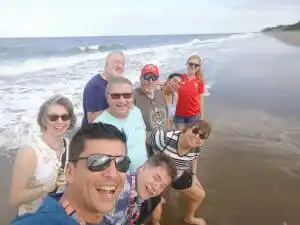 The actual response.
What do you need to retire in Panama? To be legal, qualifying income or investment in Panama and proper residency documents are required. In practice, people need a realistic budget, health care, a place that fits their real life, and enough on-the-ground understanding to make smart decisions.
When you take on Panama, not as a low-cost fantasy, but as a real place to build a fulfilling next chapter, you are in a much stronger position. It’s not enough to qualify for retirement in Panama. The aim is to arrive confidently, settle down well, and feel good about your choice for the life you really want.
Oscar, Megan, & Rod
Retire in Panama Tours
Helping You Call Panama Home!